


For years, Amazon has been trying to shift how consumers discover products. First with product recommendations, then with Sponsored ads, and most recently with Rufus, an AI assistant designed to help shoppers research and compare before they buy.
Rufus was already one of the more advanced AI shopping assistants in retail. It gave consumers a way to ask more detailed product questions, compare options, and get recommendations inside Amazon’s ecosystem. More importantly, it showed that AI-assisted shopping could influence purchase behavior. Amazon has said 60% of consumers who used Rufus were more likely to purchase after using it, which made the next step clear.
The challenge was adoption. Rufus lived as a separate conversational experience, which meant consumers had to choose to use it. For many shoppers, the traditional search bar was still the faster and more familiar path.
That changed recently with Amazon rebranding Rufus as Alexa for Shopping and bringing the experience more directly into the Amazon shopping journey. The update is not just a new name. It brings conversational AI into places consumers already search, browse, compare, and buy, including the Amazon app, Amazon.com, and Echo devices. Consumers do not need to be using Alexa+ or Prime to encounter the experience in the Amazon search flow, which matters because the barrier to adoption becomes much lower.
How Alexa for Shopping changes discovery
Alexa for Shopping is bringing conversational commerce directly into the Amazon search bar, so consumers no longer need to navigate away to a separate tool. They ask a question where they already search, and Alexa for Shopping answers them. This brings conversational commerce into the place where billions of shopping journeys start everyday.
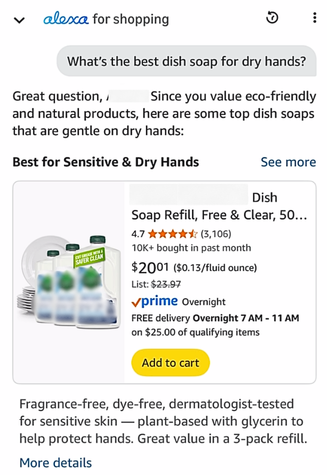
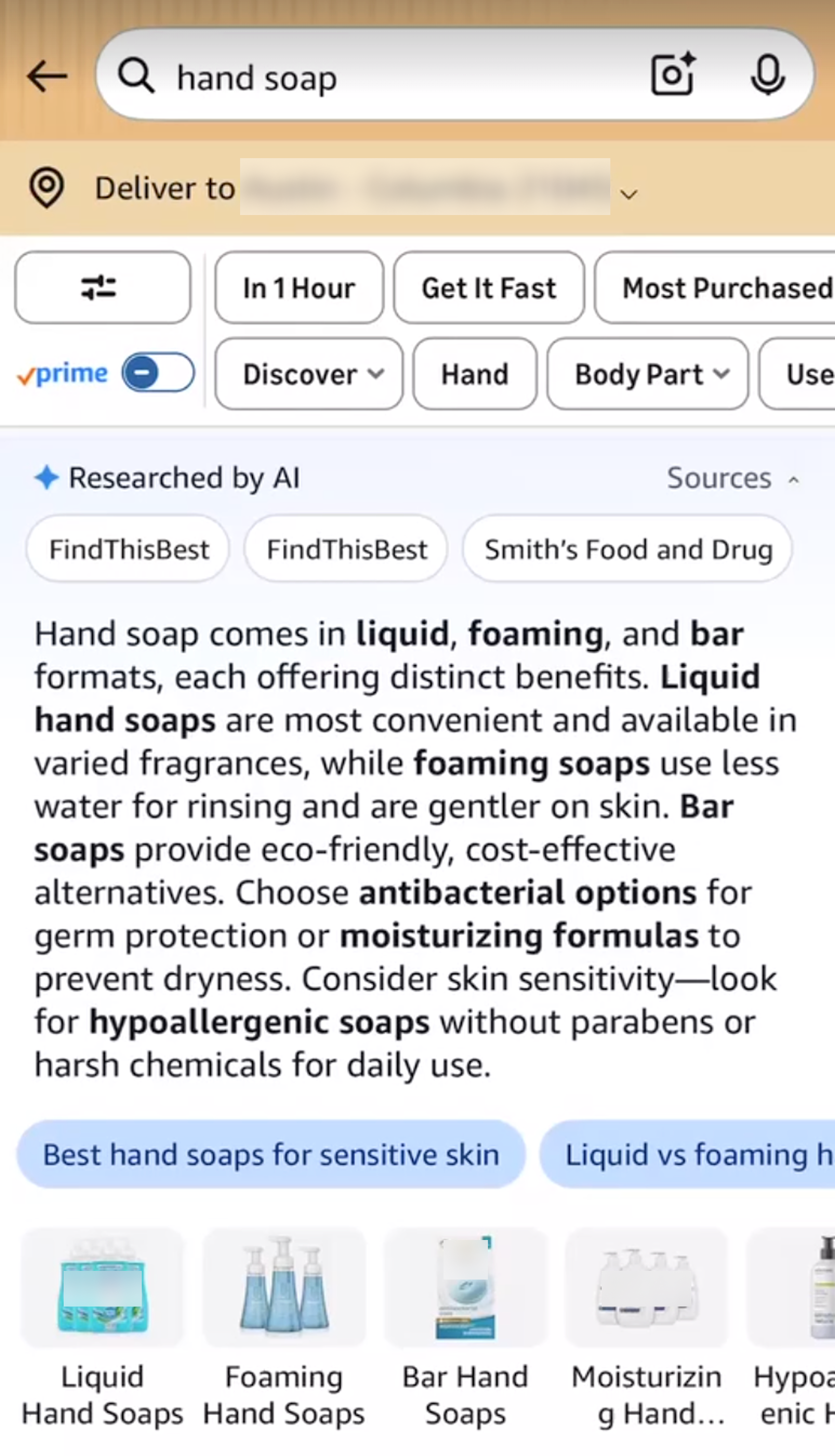
The integration also layers in personalization from across the entire Alexa ecosystem. Amazon now has data from voice conversations, smart home usage, shopping history, and browsing behavior all feeding into one system.
Conversational search expands the kinds of shopping missions consumers can bring to Amazon. A consumer might start by brainstorming a weekend camping trip with Alexa on an Echo device, asking what they need to pack for two adults, one child, and a dog. Later, inside the Amazon app, they can ask Alexa for Shopping to help build a packing list based on that earlier conversation. Alexa for Shopping could turn that context into a personalized shopping guide across tents, sleeping bags, portable chargers, dog travel bowls, sunscreen, snacks, and first-aid essentials.
Alexa for Shopping can also use one year of pricing data to support more connected shopping moments. If a consumer sets a price alert in the Amazon app, their Echo can notify them when the item drops in price. That app-to-device connection is what makes this different from a siloed chatbot experience.
For brands, this is significant because it changes the discovery problem at a moment when consumer attention is more fragmented than ever. Conversational search was always going to happen on Amazon, but the speed of adoption will accelerate because consumers don't have to learn a new behavior. They're just extending a behavior they already do.
What brands need to know about the ad experience
Amazon is integrating Sponsored ad placements into Alexa for Shopping, though how those placements work is still evolving.
We're seeing Sponsored ad opportunities consistently show up in test environments, and the most likely initial move is integrating Sponsored Prompts alongside the recommended prompting in search, which would notably increase traffic to Sponsored Prompt placements.
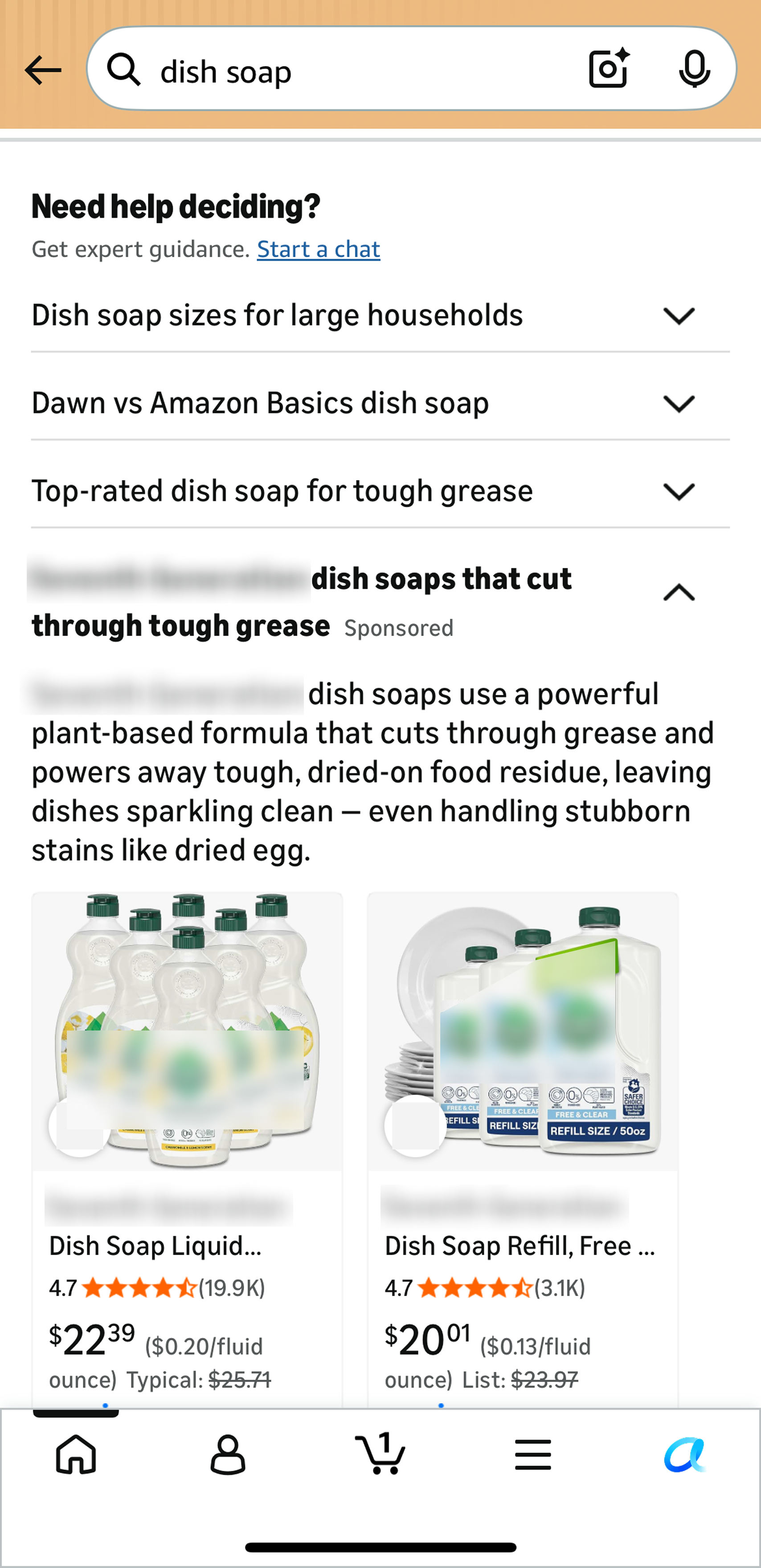
At the same time, Amazon's AI Overviews will now summarize conversational results at the top of search. These summaries determine what consumers see first and which sources Amazon trusts. How ad placements will appear alongside or within AI Overviews is still being worked out, but both will shape the experience.

Brands shouldn't expect an overall decrease in ad activity but should anticipate potential budget reallocation as new or relocated placements become available.
A consumer asking a question in the search bar phrased as they would ask an Alexa device represents a different moment than typing typing a standalone search term. For example, a consumer asking, “What do I need for a beach vacation with a toddler?” is in a different discovery moment than a consumer typing “kids sunscreen.” The intent may overlap, but the query is broader, the consideration set is larger, and the path to purchase could include multiple categories and products. You need to know which sources feed the AI Overviews to ensure your products and content show up accurately.
This could also start to shift how brands interpret search query reporting. As consumers type more natural, question-based prompts into Amazon’s search bar, brands may see longer queries, more category-led language, and more use-case driven intent. Traditional keyword analysis will still matter, but it may not be enough on its own. Teams will need to understand how conversational queries map to product discovery, Sponsored Prompt engagement, AI Overview visibility, and downstream conversion.
How to optimize for Alexa for Shopping and conversational commerce
Start by auditing your product data and positioning across Amazon. Alexa for Shopping relies on rich product information to make recommendations and comparisons. If your data is incomplete, inconsistent, or buried in long descriptions, you're making it harder for Alexa to surface your products in conversational queries. Clean up product attributes, make key benefits scannable, and ensure your content is structured in ways that AI systems can parse.
Then, if your product fits the Scheduled Actions model (routine purchases like dog food, vitamins, cleaning supplies, or household essentials), think about how to make automation easy for consumers. This is a new lever for brand loyalty and repurchase , and that means you must ensure your product is available for Prime delivery, that pricing is competitive for regular buyers, or that your product page makes it obvious why someone should automate a repurchase. Consumers want to know they'll never run out of what they need, and those who automate a purchase are less likely to switch to a competitive brand.
Beyond data and automation, consider your budget allocation across Amazon channels. If Sponsored placements are moving or expanding in Alexa for Shopping, your Sponsored Products, Sponsored Brands, and ADSP budgets may need adjustment. Amazon is still optimizing how ads work in Alexa for Shopping, so the first wave of placements may not be the final version. Work with your Amazon and Flywheel team to understand where new placements are available, test incrementally rather than making wholesale shifts, and stay engaged as the product evolves. Brands that move early will have better insight into what's coming next.
Prepare your content for conversational search queries. With Alexa integrated directly into the search bar, consumers are now typing the way they talk. Instead of searching "dog treats sensitive stomach," they might type "What's a good dog treat for sensitive stomachs?" Make sure your keywords and content account for natural language patterns, not just traditional search terms.
Track path-to-purchase differently. Conversational commerce means the journey from discovery to purchase may look different than traditional search. A consumer might ask a question, get a recommendation, set a price alert, and buy days later. Don't judge conversational touchpoints solely on immediate conversion.
The real shift
Alexa for Shopping is Amazon's move to make conversational commerce feel inevitable rather than innovative. By tying it to a device ecosystem that's already deeply embedded in consumer homes, Amazon removed the friction that kept Rufus from mainstream adoption.
For brands, this means the question is no longer "Will conversational commerce matter?" It's "Where will your brand show up when consumers stop browsing and start asking?"
The brands that prepare now by cleaning up product data, understanding the Scheduled Actions opportunity, and rethinking budget allocation will be better positioned to win. The ones that wait will be playing catch-up, trying to show up in conversations that Alexa is already having without them.
If you want to explore how Alexa for Shopping fits into your broader Amazon strategy, or need help thinking through how to optimize your products and positioning for conversational discovery, let's connect.

Ready to grow your business?
Let's discuss the best approach to meet your brand's specific needs.
Let's connect