


AI search is reshaping search, discovery, and consideration
AI shopping tools are changing how shoppers find and choose products, and the shift is happening faster than most brands have adjusted for.
Tools like Amazon's Alexa for Shopping, Walmart's Sparky, and non-retailer Large Language Models respond to specific shopper questions with a short list of recommendations, not pages of results to scroll through. That dynamic compresses the consideration set significantly. If your product isn't in that short list, the shopper moves forward without you ever being part of the conversation.
Most brands have a reasonably clear picture of how they're performing in traditional search. They know which products rank well, which keywords drive traffic, and where there's room to improve. That visibility has been hard-won, reflecting years of work building organic and paid search presence.
AI search operates on different logic entirely. AI assistants pull from product information to answer a shopper's specific question, and keyword bidding doesn't factor in. A product that ranks consistently well in traditional search can still be largely absent from those AI-generated results.
Why the visibility stakes are higher than they appear
The difference becomes concrete when you look at what shoppers ask and what the LLMs then look for. Shoppers use these tools to pose specific, conversational queries: "What's a good gift for a 3-year-old?" "Which hair spray works for fine hair?" "Is this safe to use during pregnancy?" The underlying LLMs scan available product data for the signals that answer those questions.
When a shopper asks "What stuffed animal is safe for a 3-year-old?", the model is looking for age range, safety certifications, materials, and related details. If those signals aren't clearly present on your product page, the AI has less reason to include you, regardless of how well the ASIN ranks in traditional search.
Shoppers who use AI tools are significantly more likely to purchase, which makes the stakes of being included meaningfully higher. Exclusion from that shortlist is a visibility problem that will eventually become a revenue problem.
GEO is how brands earn a place in the shortlist
Generative Engine Optimization (GEO) is the practice of making sure your product information is structured, complete, and machine-readable in a way that AI systems can actually use when generating recommendations. It's a different discipline from traditional SEO, which is built around keyword rankings and search result positioning.
GEO is built around answering the specific, conversational questions shoppers are asking AI tools before they decide what to buy.
Many brands haven't moved on this yet, which means the window to build a real advantage is still open. The brands that act now are building a foundation that compounds over time as AI search adoption grows.
How Flywheel turns GEO into action
Our recently launched GEO Optimization service for Amazon, Walmart, and Target was built to make the process of optimizing product pages for AI search structured, simple, and actionable for brands.
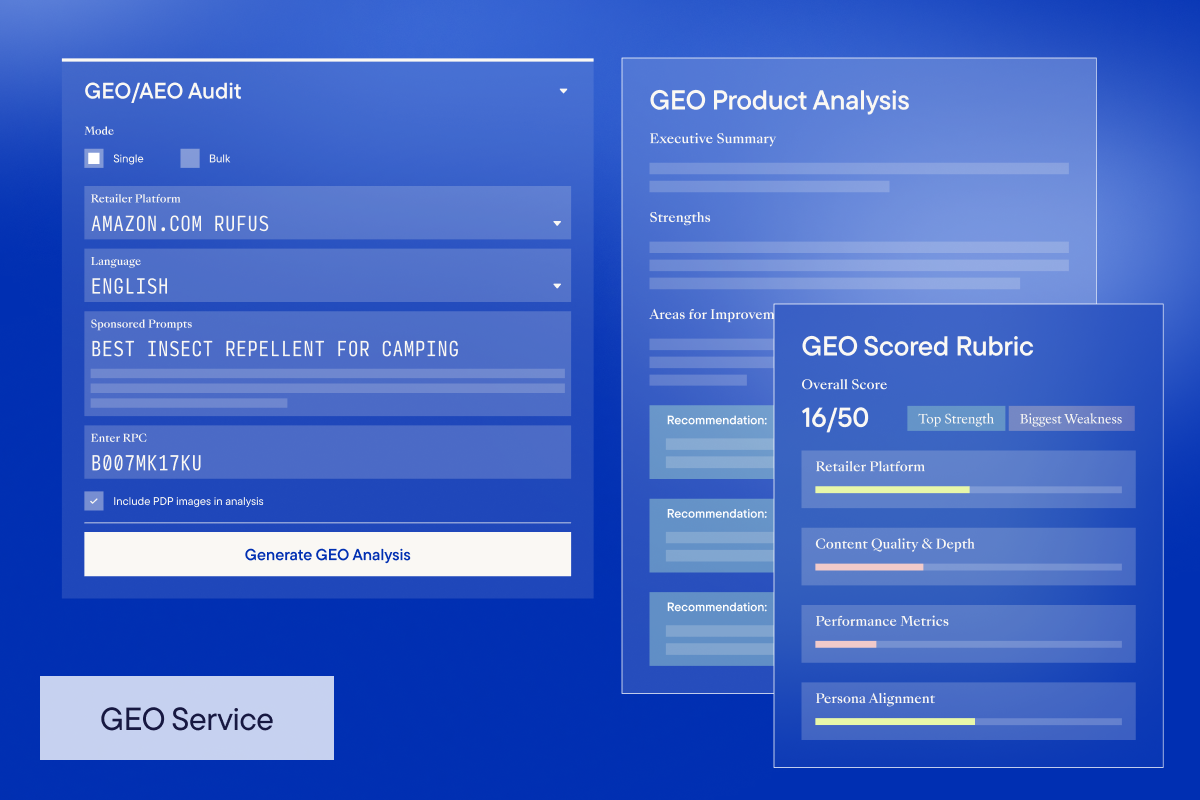
The starting point is understanding what the AI systems behind these tools are actually looking for. Our team has reverse-engineered the LLMs powering Alexa for Shopping, Sparky, and other AI shopping tools to understand what content actually drives inclusion in recommendations, and we've built that understanding into a tool that scores your product pages for AI-search readiness.
When a product scores poorly, the tool identifies exactly what's missing and surfaces the specific content that would close the gap. If a product page is missing age range information, safety certifications, gifting context, or answers to the follow-up questions shoppers tend to ask before they buy, the tool surfaces that clearly and tells you what to add. Every recommendation reflects how we know these AI systems actually evaluate and surface products, not what we assume.
We also make sure that GEO recommendations factor in where you're already winning in traditional search. GEO and SEO serve different functions, and optimizing for one without accounting for the other creates new problems. The goal is stronger AI-search visibility without losing the keyword and ranking signals that still drive the majority of your organic traffic.
Once recommendations are ready, Flywheel's team implements them directly into your product pages and syndicates the content across the relevant retail platforms, so the improved information reaches wherever AI systems are pulling data from. We handle this on your behalf so you don't have to figure out where to start or how to execute.
When brands invest in GEO optimization, performance follows
After we ran our GEO Optimization analysis and implemented recommendations across a portfolio of products for one brand, the results shifted quickly.
PDP views increased by 192%, add-to-cart conversions increased by 85%, and purchases increased by 82%. The products that received GEO Optimization also grew nearly twice as fast as comparable items in the same category and around five times faster than the broader portfolio.
Those products were already strong, they just weren't visible where shoppers were looking.
Where AI search is heading
AI shopping tools are still early in their adoption curve, but Alexa for Shopping and Sparky are already part of how a meaningful and growing share of shoppers make purchase decisions today.
The brands that invest in GEO now will be the ones with a foundation already in place when AI search becomes the default experience for most shoppers, and the ones that wait will be catching up in a more crowded space.
If you want to understand how your products are performing in AI search and where your biggest opportunities are, let's connect.

Ready to grow your business?
Let's discuss the best approach to meet your brand's specific needs.
Let's connect