
ROAS changed retail media.
For the first time, brands could connect ad spend more directly to sales outcomes. They could see which campaigns drove conversion, which products responded, and which investments appeared to pay back quickly.
That visibility was a major step forward. But as commerce becomes more fragmented across retailers, social platforms, creators, AI agents, marketplaces, and physical stores, ROAS is no longer enough on its own.
This is one of the central themes in Flywheel’s latest whitepaper, The Big Shift: From managing to mastering fragmentation. Brands are no longer operating in a linear journey where one channel creates demand, another captures it, and a single metric explains what worked. Consumers are moving across ecosystems, devices, retailers, and moments of influence. Measurement has to move with them.
ROAS can tell you what converted. It cannot always tell you what created the consumer, what influenced the journey, or what that consumer is worth over time. The next era of commerce needs a broader view.
The problem with optimizing only for ROAS
ROAS is useful, but it has a bias. It tends to reward short-term conversion.
If a consumer sees an ad, clicks, and buys, ROAS gives the campaign credit. That can be helpful for understanding immediate performance. But it can also encourage brands to overinvest in consumers who were already likely to buy and underinvest in consumers who may be more valuable over time.
A campaign that converts repeat buyers may look efficient. A campaign that acquires new consumers may look expensive. But if those new consumers repeat, trade up, subscribe, or enter the brand through a high-value product, the long-term return may be much stronger than the initial ROAS suggests. ROAS measures the transaction, but brands need to understand the consumer.
From ROAS to Return on Consumer
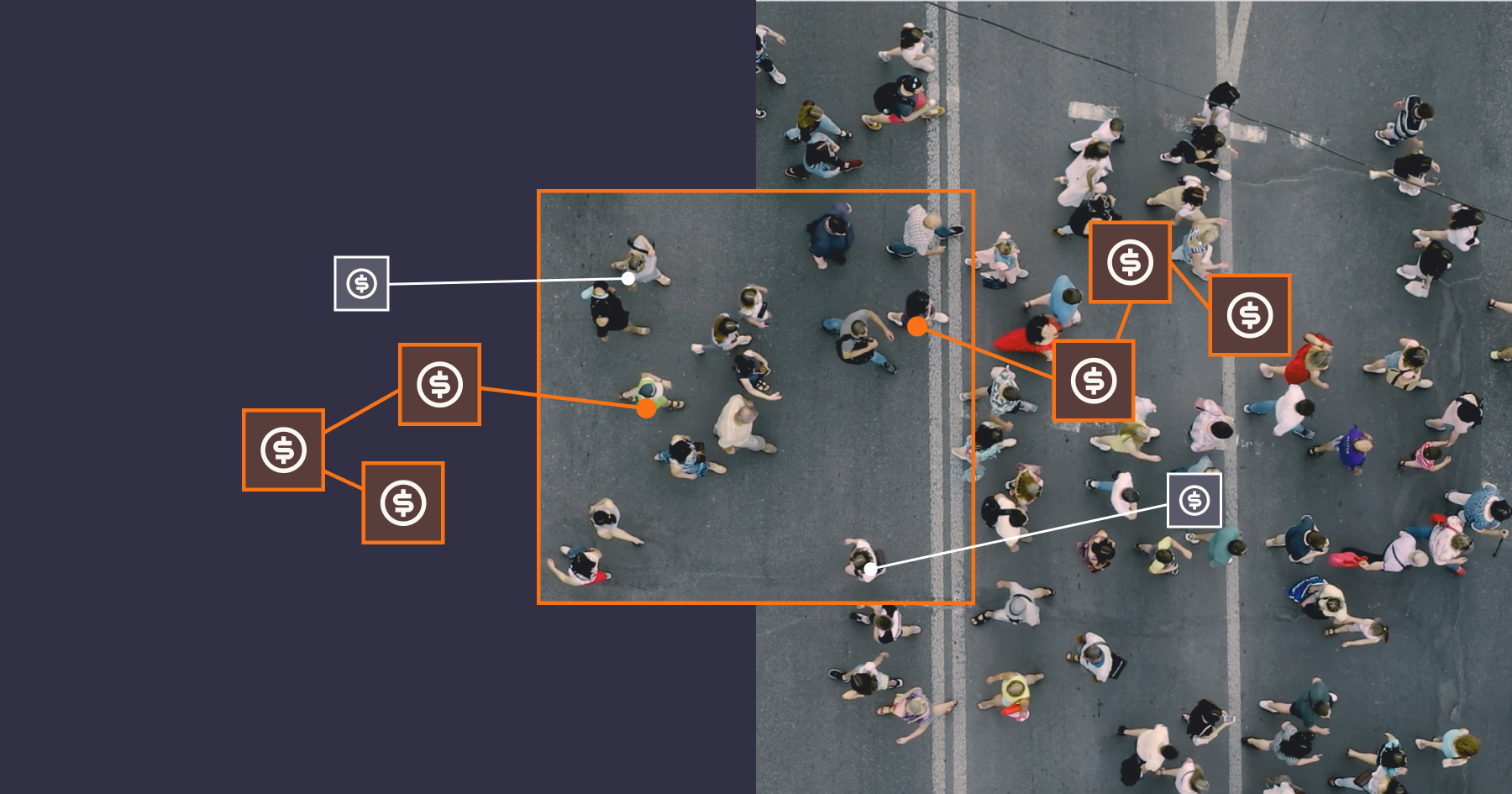
Return on Consumer shifts the question from “What did this ad return?” to “What is this consumer worth?”
That distinction matters because not all conversions are equal. One consumer may buy once on promotion and never return. Another may enter through the right product, repeat frequently, buy across the portfolio, and build long-term value for the brand and retailer. If both consumers are measured only through the first purchase, the brand misses the difference.
A Return on Consumer approach helps brands evaluate acquisition, retention, repeat purchase, loyalty, and lifetime value in one connected view. It encourages teams to invest in the consumers most likely to drive sustainable growth, not just the tactics most likely to generate immediate payback.
Identity is the bridge across fragmentation
To measure consumers over time, brands need stronger identity resolution.
That is difficult because commerce is increasingly divided across walled gardens. Amazon, Walmart, Target, Instacart, and other retailers each have their own first-party data environments. A consumer may shop across multiple retailers, but each ecosystem may see that person differently. For brands, that creates two major problems.
The first is targeting. A high-value consumer in one ecosystem may be invisible or misclassified in another. That can lead to wasted spend or missed opportunities. The second is measurement. A consumer may see an ad in one environment and buy in another. Without a more connected identity layer, brands struggle to understand the true path to purchase.
Unified IDs and clean room capabilities can help bridge these gaps. They do not replace retailer data, and they do not eliminate the need for privacy-first governance. But they can help brands create a more connected view of consumers across ecosystems. That connected view is essential for moving beyond channel-based optimization.
Shopper marketing needs a full-funnel reset
Measurement is not the only area that needs to evolve. Shopper marketing does too.
For years, shopper marketing was often treated as an at-shelf discipline. The focus was on displays, promotions, packaging, merchandising, and physical availability. Those elements still matter, especially in CPG, where the store remains a critical conversion environment. But by the time a consumer reaches the shelf, the decision is already in motion.
Media exposure, creator recommendations, search behavior, pricing, reviews, product content, prior purchase history, and retailer context all shape what the consumer expects before they ever see the product in-store. That means the shelf is the final confirmation point, not the sole decision environment.
If upper-funnel messaging promises one thing, the product detail page says another, and the shelf experience fails to make the value clear, friction enters the journey. That friction can delay or prevent conversion. The answer is not to diminish shopper marketing. It is to expand it.
Shopper strategy should connect demand creation, demand capture, and in-store conversion. Every touchpoint should reinforce the same value proposition, while adapting to the context where the consumer is making a decision.
Internal silos limit external performance
Many brands are trying to solve fragmented consumer journeys with fragmented organizations.
Brand teams manage awareness. Sales teams manage retailer relationships. Retail media teams manage sponsored ads and display. Shopper teams manage activation. Analytics teams report performance. Agencies and partners may sit across each function. Each team may be doing good work, but if the work is not connected, the consumer experience suffers.
A consumer does not care which team owns which touchpoint. They experience the brand as one connected journey. That is why mastering fragmentation requires internal alignment. Brands need shared goals, shared planning, shared data, and shared accountability. They need to evaluate channels by their role in the journey, not only by isolated performance metrics. Sponsored Products may be excellent at capturing demand. Display may shape consideration. Creator content may build trust. In-store activation may remove final friction.
Each touchpoint matters, but each should be measured according to the role it plays.
Partners need to be accountable for outcomes
As commerce becomes more complex, the role of external partners also needs to change. The traditional model often rewarded activity: hours billed, campaigns launched, reports delivered, and meetings held. But activity is not the same as impact. A Total Commerce model requires partners who can connect strategy across channels, automate work that does not require human judgment, and focus talent on the decisions that drive growth.
Brands should expect partners to speak in outcomes, not just outputs. That means tying work to measurable business results. It means helping teams consolidate strategy rather than protecting silos. It means building data infrastructure and real-time capabilities that make faster decisions possible. And it means aligning incentives so that everyone is focused on the same commercial goals.
What brands should do next
Moving beyond ROAS does not mean abandoning ROAS. It means putting it in context. Brands should continue using ROAS to understand short-term media efficiency, but they should avoid treating it as the only measure of success. To build a more durable measurement model, brands should focus on five priorities:
Measure consumers over time. Understand first purchase, repeat behavior, portfolio expansion, loyalty, and long-term value.
Evaluate channels by role. Do not judge every touchpoint by last-click or last-touch conversion alone.
Invest in identity and clean room capabilities. Build a more connected view of consumers across retailers and platforms.
Align teams around shared outcomes. Shift from channel-specific goals to consumer and commercial goals.
Expect partners to drive impact. Prioritize partners who can help reduce fragmentation, not profit from it.
The next era belongs to consumer-centered brands
ROAS helped brands understand performance in a more accountable way. But the next era of commerce requires a broader lens.
Brands need to know which consumers they are acquiring, what those consumers do next, how much value they create over time, and which investments influence that journey.
That is the foundation of Return on Consumer.
It is also one of the key shifts explored in Flywheel’s whitepaper, The Big Shift: From managing to mastering fragmentation. The full paper outlines how brands can move from fragmented channel optimization to connected consumer growth, and why the brands that master that shift will be best positioned to lead their categories.

Ready to grow your business?
Let's discuss the best approach to meet your brand's specific needs.
Let's connect